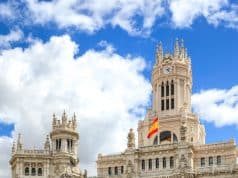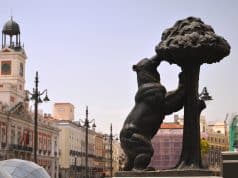

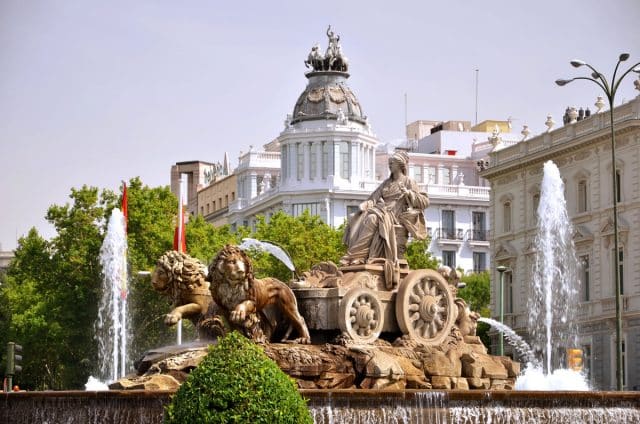
Plaza de Cibeles is one of the most famous and representative areas of Madrid's city centre, produced between the late 18th and early 20th centuries, It took quite a long time to complete. In it we can find such iconic monuments as the Fuente de Cibeles, dedicated to the same Greek goddess (in Roman mythology goddess Ceres) that gives the square its name (although it was formerly called Plaza de Madrid and not Cibeles), or important buildings such as the headquarters of the Bank of Spain or the current headquarters of the Madrid City Council., which is housed in the Palacio de Cibeles.
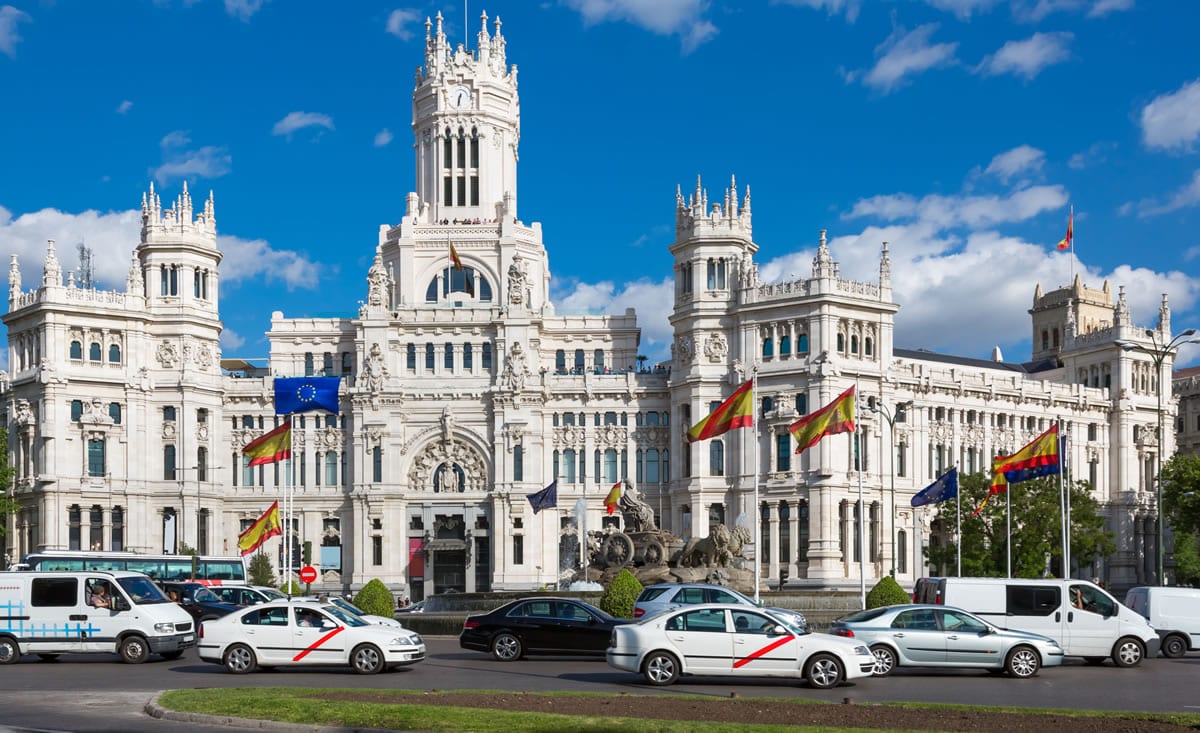 Other outstanding buildings that make up this square, and that also give meaning to its fame and importance, include the Buenavista Palace or the Linares Palace.
Where exactly is Plaza de Cibeles located?
Plaza de Cibeles is located in the heart of Madrid, between Puerta de Alcalá and the Banco de España, and in the middle of the intersections of Paseo de Recoletos, Paseo del Prado and Calle de Alcalá. In the middle of the square, we can find the famous Fountain of the Goddess Cibeles, a neoclassical fountain made of marble in 1782 by the artist and architect Ventura Rodríguez. Witness to such crucial events as the Spanish Civil War, which took place between 1936 and 1939 of the last century, today it continues to be an important site of the Spanish Civil War. a world-famous icon of Madrid and Spain, The Real Madrid football team has also contributed greatly to this, as all their important celebrations take place in this fountain and this square, to whose goddess the players offer their prizes.
The location of the Plaza de Cibeles was very important from the beginning, and not only because it is in the centre of Madrid, but also because its location was the beginning of the area where monarchs and nobles lived., The Plaza de Cibeles is the palatial area that the old Madrid enjoyed since the Renaissance. Nowadays, the Plaza de la Cibeles is surrounded by three well-known districts: the Retiro district, the Salamanca district and the central district.
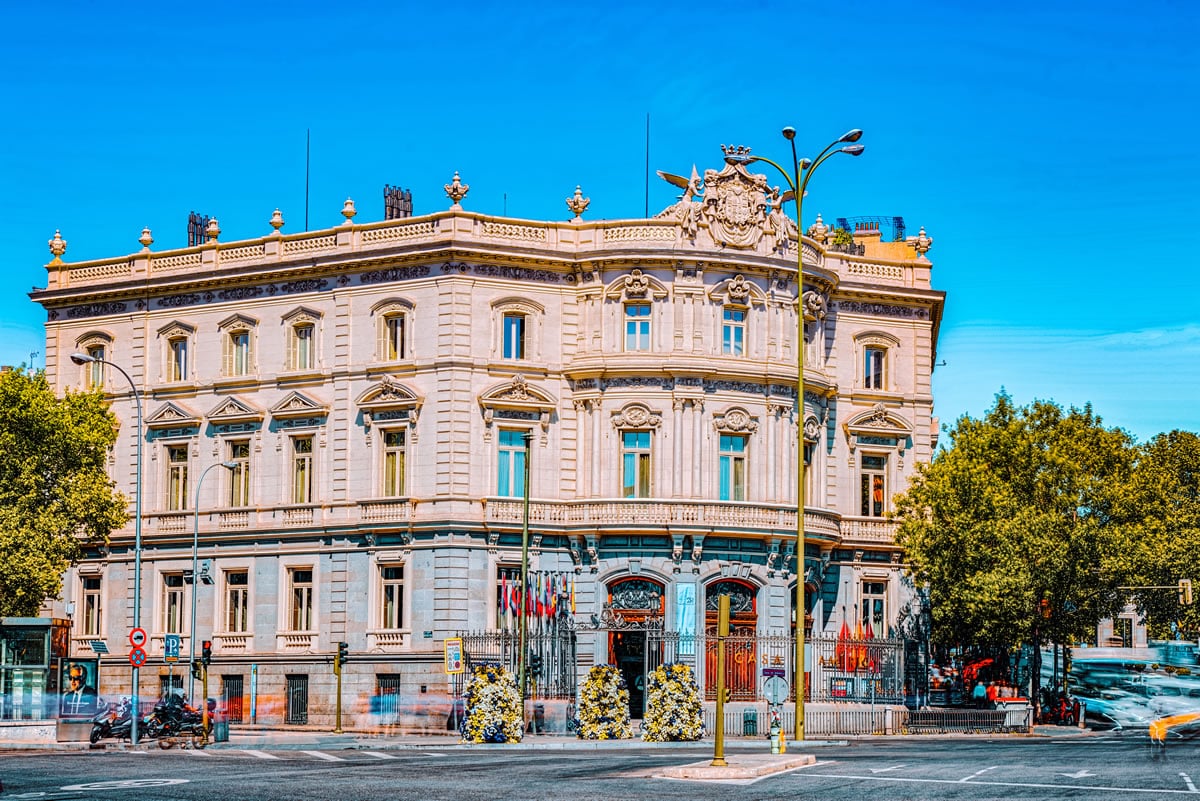
In addition to the Fuente de Cibeles, the square is surrounded on four sides by some of the most important buildings in the city of Madrid, the oldest of which is the so-called Buenavista Palace, It was built in 1777 and is today the headquarters of the Spanish Army. Next to the Buenavista Palace stands the Linares Palace, built in 1877, today it is the headquarters and property of the cultural organisation Casa de América, which brings people closer to Latin America's past and present through economic and political as well as cultural events.
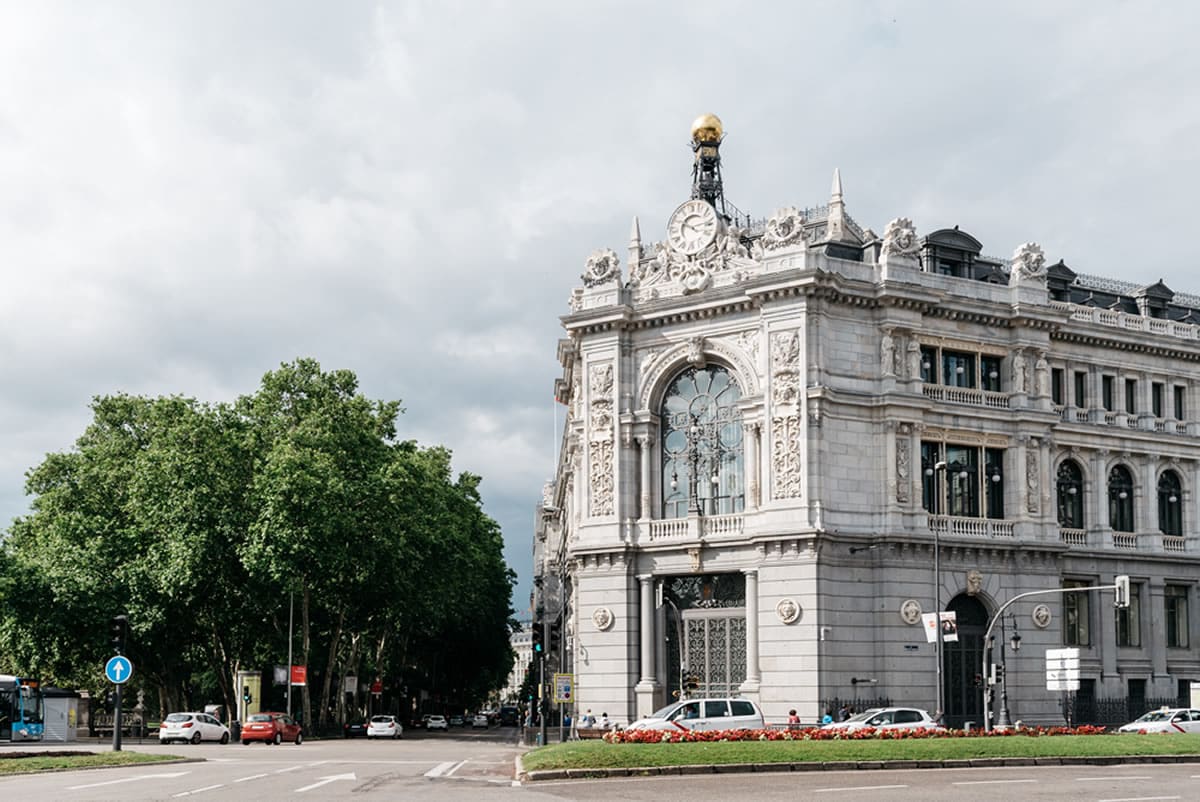
 On the other side, the Plaza de Cibeles is guarded by the Palacio de Cibeles, also known as the Palacio de Comunicaciones (formerly known as the Palacio de Cibeles). the old Casa de Correos (Post Office) and today the seat of the Madrid City Council) and the Bank of Spain. All of them are stately buildings that speak of the palatial past that the city of Madrid enjoyed in another era and that make up the picturesque and stately appearance that is so characteristic of the centre of the Spanish capital.
Origin and design of the Cibeles Fountain
The monumental Cibeles Fountain is a sculpture depicting the Greek goddess of nature and fertility seated on a large chariot driven by two wild lions while holding a sceptre and a key. The whole ensemble symbolises the great power attributed to this goddess, or in other words, to Mother Nature. As we have seen, fIt was designed during the reign of Carlos III by Ventura Rodríguez and sculpted in 1782., The exhibition was not always located in the Plaza de Cibeles, but it was originally in front of the Neptune Fountain, at the gates of the Prado Museum.
 It is believed that this fountain was also very important in the past because it served water to the population, until it was moved to its current location in the 19th century, when it became a a hallmark of the capital, without any additional function other than the aesthetic, historical and cultural one.