

Madrid is a city full of interesting places to visit; from museums, exhibitions, monuments, parks and gardens, neighbourhoods and corners full of history. Not to mention its gastronomy and its varied offer of shops and shopping centres. It takes many days or even weeks to get to know the capital. But if you're one of those who don't have time for sightseeing and want to make a getaway to the city, we'll help you plan your 24-hour express visit.
A day in Madrid can give you a lot to do and we are going to show you with a morning, afternoon and evening itinerary. These are the plans we suggest, write down the ones that interest you most and adjust them to your agenda. You'll love them so much that you'll come back for more!
What to do in the morning in Madrid
Start at La Puerta del Sol

I advise you to start your tour from the same place. Puerta de Sol. It is very easy to get there because the main means of public transport, metro, buses and suburban trains stop at Sol. Here you will get an idea of the multiculturalism that coexists in the city of Madrid, people of all nationalities coming and going. The rush is reflected in this central square. That is the pace of this city.
In front of the famous clock that chimes every 31st December, is one of the most photographed plaques in Madrid, on Kilometre Zero. Don't hesitate to place your feet here and immortalise them with a photo at the point where the roads that run through Spain start.
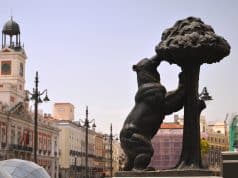
Nearby, the statue with the symbol of the city, the Bear and the Strawberry Tree, A meeting point for many Madrileños, especially on weekends. After the corresponding selfies, we are going to get to know one of the most emblematic neighbourhoods of the capital.
Visit to the old part of Madrid, the Austrias quarter
Old Madrid can be easily explored on foot in a couple of hours. All you have to do is wander through its irregular streets named after remnants of Spanish history.
In Madrid's old town we can visit such emblematic places as the Plaza Mayor, the Royal Palace and the Plaza de Oriente, among many other surprises.
Plaza Mayor of Madrid
A centre of commerce and popular gatherings, from the 16th century to the present day. It has 10 entrances, most of which are arched, the main one, known as the Arch of Cuchilleros. Located on the west side of the square, it leads to the Cava de San Miguel and Calle de Cuchilleros. Here you will find the most typical taverns and taverns of Madrid, with tapas guaranteed at any time of the day! Inside the square there are several buildings and monuments that you can't miss.

House of the Bakery and Butcher's shop. They currently belong to the City Council. The first is the Madrid Tourist Office. And the second building has, to this day, no defined use. It is characterised by the fact that it is topped by two angular side towers.
Statue of Philip III. It is the sculpture of this King of Hamburg on horseback that has presided over the Plaza Mayor since the 19th century, after being installed in different parts of the town for many years.
Before leaving the Plaza Mayor you have to try the most famous snack in Madrid: the squid sandwich. The characteristic smell will lead you to the bars in the surrounding streets.
Plaza de Oriente

The Royal Palace presides over this huge pedestrian square. You'll have to leave the entrance to the palace for another visit to Madrid because it can take you another couple of hours to tour the main rooms.
Almudena Cathedral
Neo-Gothic in style, construction began in 1883, but was not completed until 100 years later. It can be visited free of charge, with a donation of 1 euro, every day from 9 am to 8.30 pm. Its crypt, located beneath the cathedral, is well worth a visit. Access is via Calle Mayor and is also free of charge.
Sabatini Gardens
They owe their name to the Italian Francesco Sabatini, who was responsible for their design and construction. They border the east side of the Plaza de Oriente. You can get a wonderful view from the railing on Calle Bailén. Behind them are other gardens, larger in size, full of hedges and fountains: these are the Campo del Moro Gardens.

Teatro Real
On the other side of the Plaza de Oriente is the Plaza de Isabel II, presided over by the Teatro Real. One of Europe's leading music halls. Every season the world's leading operas and ballets are premiered here. This theatre organises guided tours to get to know the inside of this scenic building of almost 1,500 square metres.
Plaza de la Villa
Very close to the Royal Palace you will find this pedestrian square surrounded by buildings dating from the 15th, 16th and 17th centuries. The architect Juan de Villanueva was in charge of the layout of this square in the 18th century. Since then it has been the seat of the Madrid City Council, although in 2007 the mayor's office was moved to the Palacio de Cibeles.
What to do in the afternoon in Madrid
Once you've made a couple of stops at Madrid's oldest taverns in the Austrias district and filled your stomach, we recommend you wash down your meal with a stroll through the capital's most famous park: El Retiro.
El Retiro Park

It is known as the green lung of the city. King Philip IV ordered it to be built and since the 19th century it has been open as a public park. Today it is a place where you can stroll, play sports, have a drink on its terraces, go boating on the main lake or visit an exhibition in the two pavilions inside: The Casa de Vacas and the Palacio de Cristal. Admission is free and free of charge. The park also hosts occasional events such as the Book Fair or popular races at weekends.
Paseo del Prado-Recoletos
It is undoubtedly one of the axes where we find the most important monuments and museums of the city. Don't insist on seeing everything. Perhaps a stroll along this avenue will give you an idea of what you can visit if you have more time.
Puerta de Alcalá

It is the most photographed monument that has seen the history of the city since King Carlos III ordered it to be built in the 18th century. Located in the Plaza de la Independencia, right next to El Retiro, the Puerta de Alcalá has become the undisputed symbol of Madrid. It is one of the 5 royal gates that gave access to the city. Tourists and visitors do not leave the capital without taking a snapshot of this monument. If you go down Calle Alcalá, you will find another of the most visited and photographed squares.
Plaza de Cibeles
Here the goddess awaits us Cibeles on a chariot pulled by two lions. Its origin as a fountain was to supply water to the people of Madrid in the 18th century. Today it has become a decorative statue, as well as a symbol for Madrid fans, who come here to celebrate Real Madrid's victories.

In front of the fountain, the Palacio de Cibeles or Palacio de Comunicaciones. Inaugurated in 1919, the building was originally and until a few years ago the central headquarters of the Post Office. Today it is used to house the municipal council offices. Top of page there is a lookout point and a restaurant from where you can enjoy breathtaking views of the city. If you can, don't hesitate to go up and watch the sunset.
Prado Museum
As one of the best art galleries in the world, you need to spend a lot of time here. So take in its location and the essential information, visiting hours and prices for another time.

The Hieronymites
This is how it is known to the people of Madrid, but it is actually called San Jerónimo el Real Parish Church. It was a convent in the time of Philip IV, but with the passage of time only the church and one of the cloisters have been preserved. Thanks to the extension of the Prado Museum, the latter has been included in the building and is known as the Moneo Cube.
Royal Botanical Garden of Madrid
If you are a Botany enthusiast, you can enter and visit, among other curiosities, its large exhibition of bonsai or its impressive greenhouses. It is right next to the Prado Museum.
Neptune Square
The fountain is actually called Plaza de Cánovas del Castillo, but the locals know it as Plaza de Neptuno because of the white marble sculpture. From here you can see Madrid's two most emblematic hotels: the Ritz and the Palace. And just a few metres away you will see the two lions that preside over the Congress of Deputies.
This square is also the meeting point for the city's red and white team to celebrate their victories.
Thyssen Museum
A few metres away we find the another of the city's great art galleries. But to see this collection of art from the Thyssen-Bornemisza family, we would need between 2 and 3 hours. So make a note of it for your next visit.
What to do at night in Madrid
I imagine that at this point in the day your feet are aching. That's why we recommend that from Neptune you approach the Barrio de las Letras, It's just a couple of minutes' walk away and you can end your day's sightseeing there.

In the Plaza de Jesús there are several very traditional alternatives. Like La Dolores, This century-old tavern in front of the church of Medinaceli preserves its tiled façade and its typical gastronomy. You can enjoy tapas, canapés, vermouth and their famous gildas, a chilli pepper with olives and anchovies on a toothpick.
Dining tapas from bar to bar is typically Madrilenian. But if you prefer something more substantial, you can find interesting little restaurants in the streets of Huertas, Santa María, Lope de Vega and adjacent streets.
If you're not in a hurry to go home after dinner, go as far as Santa Ana Square to have a drink. This area is transformed at night with a nocturnal atmosphere full of tourists mingling with the locals.
If you haven't had enough, which you probably have, Madrid deserves a more in-depth visit. At least you'll have got an idea of everything this city has to offer. Depending on your interests and tastes, when you return, you know where to go.