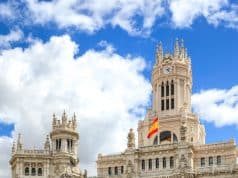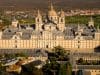


It is undoubtedly one of Madrid's most visited monuments. To enter this impressive palace is to travel through our history over the last eleven centuries. Since the Emir Mohamed I decided to build an Alcazaba to defend himself from the Christians, it became the residence of all the monarchs who passed through here. From the kings of Castile, to those of the House of Austria when the building was already an Alcazar, until it became the palace that we know today thanks to the first Bourbon king of Spain, Felipe V. Alfonso XIII was the last monarch to live here. The architect Bernini was inspired by the Louvre in Paris for the construction of the Royal Palace. Each of the official rooms is decorated differently, according to the tastes and needs of each monarch.
The 10 essential rooms

The Palace has more than 3,000 rooms, although only about 18 are visited, all located on the first floor. The visit begins in the Main Staircase presided over by a sculpture of Charles III. It has 70 steps and was designed by Sabatini. The main rooms can be accessed from here.
Halberdiers' Hall
It was conceived as a ballroom and gala dining room. It was Charles III who converted it into a hall for the halberdiers“ guard. Since 2015, the painting by Antonio López ”The Family of Juan Carlos I" has been on display here.
2. Throne Room
Official events such as the Military Easter on 6 January and the audience offered by the current King and Queen on National Day on 12 October are held here.
3. Hall of Columns
It is used for official events and music concerts with the instruments of the Stradivarius Palatinos hall.
4. Gala Dining Room
It is the largest room in the Palace. A large imperial table for 152 guests presides over the room created by King Alfonso XII.
5. Gasparini Hall
The most striking feature is its ornate, rococo-style decoration, together with chinoiserie details and the walls upholstered in silk with silver thread. Here you will find Goya's portraits of Charles IV and his wife Maria Luisa of Parma.
6. Porcelain Room
Decorated exclusively with porcelain making a trellis in the shape of a vine, it was the dressing room of King Charles III.
7. Stradivarius Hall
A collection of string instruments (violins, viola and cello) made by Antonio Stradivari is currently on display.
8. Gallery of Paintings
In the former rooms of the Infanta Isabel Francisca you can see an important collection of works by Goya, Velázquez, Caravaggio, Mengs and Sorolla.
9. Royal Armoury
It houses an important collection of arms and armour from the 13th to the 19th century.

10.Real Kitchen
This is the room that was opened to the public last autumn, after years of renovation. These are the oldest kitchens of all European palaces and the best preserved. During the visit, you can see the copper cauldrons, the enormous stone sinks, baking tins, vegetable draining pans, trays, ceramics, giant mortars... all the material used in a kitchen that has served 7 kings and a president of the Republic.
Gardens
Outside the palace grounds you can stroll free of charge through the Sabatini Gardens and those of the Campo del Moro. The first ones have a staircase access, right at the side of the building. From here you can enjoy impressive views of the entire façade of the Palace. It is open from 9.00 am to 9.00 pm.

The Campo del Moro Gardens are located at the rear of the Palace. They are less well known, but more advisable to visit. It has numerous fountains, hundreds of different trees, paths where you can come across peacocks or ducks, and some Tyrolean-style houses. The opening hours in winter are from 10 am to 6 pm and in summer it is open until 8 pm.
Solemn Relay and Changing of the Royal Guard
Every first Wednesday of the month at 12 noon (except in January, August and September), there is the Solemn Relay of the Royal Guard. The entrance is through the Puerta de Santiago, which gives access to the Plaza de Armería from Calle Bailén.

Changing of the Guard takes place every Wednesday and Saturday at 11.00 a.m. (except in July and August when it starts at 10.00 a.m.). It is entered through the Puerta del Príncipe, on Calle Bailén. It is a curious act where the palace sentries perform a relay every 30 minutes until 2 pm.
Admission is free.
Please note that they may be cancelled if there are official events at the Palace or if weather conditions prevent it.
How to get there
The Royal Palace is located in the Plaza de Oriente, in the heart of the Austrias district of the capital. It is very well connected. You can get there by public transport:
MetroThe closest is Ópera station (lines 2 and 5).
Bus: Lines 3, 25, 39, 46, 75 and 148
Suburban: Principe Pio station is about 10 minutes walk away.
You can also arrive by electric bicycle thanks to the BiciMad car parks in the area.
To visit it, the entrance is located on the Almudena esplanade, on the corner of Calle Bailén.
Timetables
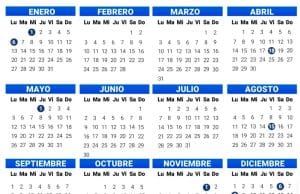
The Royal Palace can be visited practically every day of the year. It is only closed on 24 and 25 December, 1 and 6 January, 1 and 15 May and 9 November.
Winter timetable (October to March): Every day: 10:00 to 18:00
Summer timetable (April to September): Every day: 10:00 to 20:00
Extraordinary opening 201812 October from 5 p.m. to 9 p.m.

Prices
The ticket includes the visit of the main rooms and the Royal Armoury. If you prefer a guided tour, there is a supplement of €4. There is also an audio-guide service, in several languages, also for €4.
General Tariff: 10 euros
Reduced rate: 5€
.Students under 26 years of age.
. Over 65 years old
. Members of large families.
Visit to the Royal Kitchen: supplement of € 5
Free admission:
. Children under 5 years of age
.Large families
. Members of ICOM (International Council of Museums) .
. Official Guides
. Teachers
. People with disabilities
You also have the opportunity to enter the Palace free of charge from Monday to Thursday two hours before closing time. From October to March: from 16:00 to 18:00 h and from April to September from 18:00 to 20:00 h. On 18 May and 12 October.
The visit to the main rooms of the Royal Palace is estimated to take about 45 minutes. It takes about 30 minutes to visit the Royal Armoury and 20 minutes to visit the Kitchen. Plan your visit well because it is one of the essential monuments of Madrid!