

Madrid's new neighbourhoods, how the capital will grow over the next decade
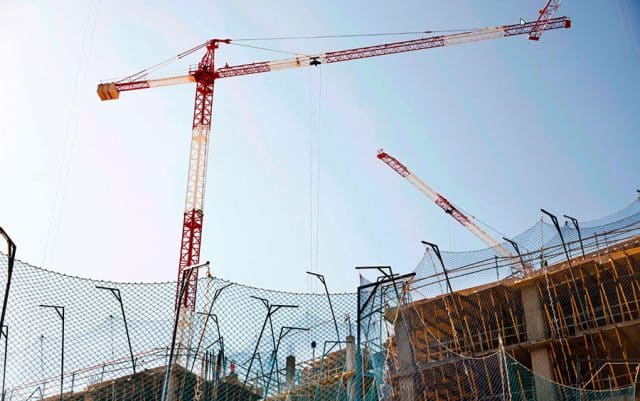
Madrid is a city that never stops growing, there are more and more of us and much more housing is needed. More than 130,000 homes planned or under construction will transform the city's map over the next 10 years, and to this end, all the major construction companies are already in Madrid working to erect buildings and housing developments using their own resources and also fostering construction plant hire in Madrid.
While house prices continue to squeeze the pockets of thousands of families, several urban developments are underway simultaneously in the city of Madrid, creating neighbourhoods the size of small towns where previously there was only countryside. These are completely new neighbourhoods, planned from scratch, with their own streets, schools, green spaces and public transport, which together will add up to more than 130,000 homes in the coming decades. A good portion of this land is concentrated in the south-east of the municipality, with the well-known neighbourhoods of El Cañaveral, Los Ahijones and Los Berrocales. The most high-profile project is located in the north of Madrid, on the former Chamartín train depots. We review what is being built, where and what it means for those looking for a home in the city.
The south-east, where the highest volume of housing is offered
Most of Madrid's new housing is being developed in the south-east of the city, next to the A3 and M45, in the districts of Villa de Vallecas and Vicálvaro. The so-called South-Eastern Developments are concentrated there, a set of urban plans that had been planned for decades and which, for the last few years, have begun to materialise in cranes, street landscaping and, following that, the first deliveries of keys.
Valdecarros, Spain's largest urban development project
Located to the south-east of Ensanche de Vallecas, in the district of Villa de Vallecas, Valdecarros is the benchmark development due to its scale. Across an area of 19 million square metres, plans are in place to build more than 51,000 homes, of which over half will have some form of public subsidy. Urbanisation work began in September 2021 and, once the neighbourhood is completed (a goal set for the horizon of 2035), it will be able to accommodate around 150,000 residents.
Los Berrocales, with the first homes in sight
Los Berrocales is one of the most advanced developments. It covers 830 hectares and plans 22,280 homes for around 65,000 residents, with completion also scheduled for around 2035. Its immediate appeal is that it is among the first areas to materialise: the first handovers and occupancies are planned from this year, 2026, making it one of the new south-eastern neighbourhoods where it will be possible to live the soonest.
Los Cerros, the new neighbourhood that will feature more green space than El Retiro
In the Vicálvaro district, Los Cerros will cover 470 hectares, of which 170 will be set aside for green spaces – an area larger than El Retiro Park. On just 12 % of the land, 16,324 homes will be built, of which 7,138 will be subject to some form of social housing provision, spread across buildings of varying heights, including towers of up to 15 storeys. Development work on this site began in the summer of 2026, marking the effective start of a neighbourhood that combines high building density with a clear commitment to green spaces.
Los Ahijones and El Cañaveral, between project and consolidation
Los Ahijones will cover more than five million square metres and will comprise 18,850 homes, with 58 % subject to some form of public protection scheme, which reinforces the role of these developments as a safety valve in the face of the shortage of affordable housing.
El Cañaveral, for its part, represents the most mature phase of all these new neighbourhoods, being practically consolidated, save above all for the completion of public facilities. Its 538 hectares are designed for around 14,000 homes and approximately 52,000 residents, and today it is already an inhabited neighbourhood, not a promise on paper.
Operation Campamento, the neighbourhood that has been waiting for four decades
Not all growth is concentrated in the southeast; to the southwest, Operation Campamento has been unlocked after nearly 40 years of administrative hurdles. Madrid City Council gave final approval to the project in September 2024, and the initial demolition work began shortly afterwards, in January. The plan involves building some 10,700 homes and stands out for its strong social housing component, which will help to significantly increase the city's stock of affordable housing. The fact that an area paralysed for decades is finally getting under way is, in itself, a sign of the shift in the pace of urban development currently being experienced in Madrid.
Madrid Nuevo Norte, the major northern project
If the south-east provides volume, the north provides brand image. Madrid Nuevo Norte (formerly known as Operación Chamartín) is the capital's most ambitious and high-profile urban regeneration project, managed by the company Distrito Castellana Norte. Spanning 235 hectares around Chamartín station, the project plans for 10,500 homes for around 30,000 residents, alongside a major office district and skyscrapers destined to become the city's new business centre.
Unlike the developments in the south-east, here the focus is not solely on housing, but on healing a railway scar that has split the north of Madrid in two for decades. It is also the longest-term project, with its full completion not expected until 2045, which gives an idea of the scale of a project that will be rolled out in phases over more than two decades.
What does all this mean for someone looking for a home?
Taken together, all these new urban developments paint a picture of a significantly larger Madrid; overall, the new neighbourhoods comprise more than 130,000 homes. For the average person, the most relevant figure is the proportion of social housing: in most of these developments, between half and almost 60 % of the homes will be subject to some form of social housing scheme, which paves the way for more affordable prices than those on the open market.
In any case, it is wise to keep expectations aligned with the timeline; these are phased projects whose completion horizons mostly lie between 2035 and 2045. Neighbourhoods like El Cañaveral are already a reality and Los Berrocales will start handing over homes imminently, but others will take years to offer the complete city; with the transport, commerce and amenities promised in their blueprints. For those looking for a home in Madrid, the good news is that the housing supply is set to grow strongly in Madrid over the coming years; the note of caution lies in understanding that this transformation will be gradual, not an overnight change.