

Much is being said about how the centre of Madrid will be after December. Whether traffic will be shielded, whether we won't be able to take our cars into the centre, whether there will be more traffic jams, whether pollution will be reduced in the city... Well, this article comes precisely to clear up doubts, fears or uncertainties about Madrid Central, as it has been christened by Madrid City Council. But what exactly is it and why is it being set up?
Background
In order to explain these measures of the municipal government, we have to go back to 2008, when the European Air Quality and Climate Change Directive approved a regulation that all EU countries had to comply with regarding NO2 levels. Since then, Madrid has been failing to comply with the nitrogen dioxide values set by Europe. In 2015, the European Commission sent a letter to the Spanish Ministry of Foreign Affairs warning of the serious pollution situation in Madrid and the metropolitan area of Barcelona. The so-called “Formal infringement procedure” is then initiated. The Spanish government asks the Madrid corporation to put in place a solution for the non-compliance with European regulations.

For its part WHO, UN-HABITAT and the Climate Coalition warn of a serious health problem in Madrid caused by high levels of pollution. According to these organisations, nitrogen dioxide (NO2) comes mainly from vehicle combustion.
For its part, the Madrid City Council is setting up a Air Quality and Climate Change Plan that has been the talk of the town.
What is Madrid Central?
As of 30 November 2018, the following will commence operations Madrid Central. It is a measure of the Madrid City Council to reduce the high levels of pollution that are being recorded in the city. To this end, a series of traffic restrictions have been established in the centre of the capital.
Perimeter of Madrid Central

Madrid Central is almost the whole of the Centro district. It includes the 4 current RPAs, which are Residential Priority Areas, i.e., Palace, Sol, Embajadores and Cortes. And as a new feature, the Justice and University districts. But perhaps what Madrid residents are most interested in knowing is which streets will be affected and how it will affect their daily lives. Here is a breakdown of the perimeter of Madrid Central with the names of the streets that make it up:
- Alberto Aguilera
- Ruiz Giménez roundabout
- Carranza Street
- Bilbao Roundabout
- Sagasta Street
- Alonso Martínez Square
- Genova Street
- Plaza de Colón
- Paseo de Recoletos
- Plaza de Cibeles
- Paseo del Prado
- Cánovas del Castillo Square
- Plaza del Emperador Carlos V
- Ronda de Atocha
- Ronda de Valencia
- Glorieta de Embajadores
- Ronda and Glorieta Puerta de Toledo
- Ronda de Segovia
- Cuesta de la Vega
- Main Street
- Bailén Street
- Plaza de España
- Princesa Street
- Serrano Jover Street
On these streets and within the perimeter of Madrid Central, access and circulation will only be allowed to vehicles that have the corresponding permit, although there are some sections where it will be possible to circulate. These are as follows:
- Santa Cruz de Marcenado Street
- Mártires de Alcalá Street
- Gran Vía de San Francisco Avenue
- Bailén Street
- Algeciras Street
- Cuesta Ramón
- Ventura Rodríguez Street to Duque de Liria Street
But what are these access criteria?
Vehicles that will be able to access

Unrestricted
The municipal government's Plan A establishes three broad groups that will not be restricted.
- Residents. All those registered in the neighbourhoods that make up the Great Residential Priority Area will be able to access and park inside. Guests will also be able to do so, after notifying the City Council. Each registered person will have 20 one-day invitations per month. These vehicles may park in the SER zone for a maximum of 2 hours or in a private car park.
- VTC (tourist vehicles for hire with driver), Taxis and Carsharing. They will be able to enter as long as they meet the requirements of the DGT environmental labels. Without badges, they will not be able to enter. They will also be able to park in the SER zone.
- Reduced Mobility. Access will be open to people with any vehicle, regardless of its environmental label. To do so, they must provide their number plate to the Consistory.
Other vehicles: those performing public services, health professionals, vehicles with foreign and diplomatic number plates, public works and public administration vehicles.
Motorbikes, mopeds and three-wheeled vehicles, with or without a DGT sticker, will also be allowed access for those who are registered.
In addition, bicycles and scooters are allowed to access and circulate, according to the provisions of the sustainable urban mobility regulations, recently approved by the City Council.
The Madrid City Council has created a total of 5,946 underground parking spaces in the area designated as Madrid Central.
According to the DGT stickers
The Directorate General of Traffic has established colour-coded environmental labels to determine which vehicles are polluting and which are not.. Depending on this badge, access to Madrid Central will be possible or not.
- Blue Label vehicles. They will be able to access and park without any problem.

- Blue Label vehicles. They will be able to access and park without any problem.
- Vehicles with a green or yellow sticker. They will only have access to park in garages.


- Vehicles with a green-blue sticker. They will be able to access and park in the SER zone for a maximum of two hours.

- No stickers. Attention drivers... No entry allowed!
Phases of Madrid Central
The main phases for implementing the Air Quality Plan A, will be:
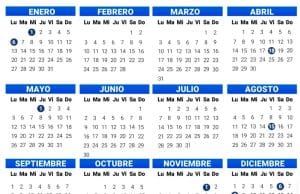
- November 2018. At the end of this month Madrid Central comes into operation. From now until February 2019, traffic will be regulated without fines. There will be control with video surveillance cameras and informative controls by the municipal police and mobility agents.
- January 2019. A two-month trial of the computerised fine management system begins. From this moment on, a letter will be sent to those who do not comply with the regulations, informing them of the infraction, but without consequences.
- February 2019. Sanctions are coming, with fines of EUR 90 those in breach of the rules.
Pedestrian Madrid
The changes that Madrid is undergoing as a sustainable city culminate in the further pedestrianisation of the city.

Gran Vía
One example of this is the work being carried out on the Gran Vía. Although the lanes for vehicles are not going to disappear, priority is being given to pedestrians and bicycles, widening the spaces to facilitate their circulation. Thus, the pavements on this main thoroughfare are widened by between 2.6 and almost 3.5 metres, depending on the section. The area gained for pedestrians will be 6,800 square metres.
Plaza de España

This is the other major axis of the city that will become pedestrianised. The pavements on Princesa and Gran Vía streets facing this square will be widened. A cycle lane and a cycle lane, limited to 30 km per hour and shared with cars, will be added. This will link Madrid Río with Gran Vía via Plaza de España. The side of the Madrid Tower will have no lanes for vehicles and will be a pedestrian walkway, connecting Calle Ferraz with Calle Princesa. In addition, the Consistory plans to remove the tunnel on this street that connects with Calle Bailén and the Extremadura motorway.
This is the macro project that is being executed in the very centre of Madrid under the name of Central Zero Emission Area.